Hane Alrustm
Psychoanalyst · Ghent
Lacanian psychoanalysis
Hane Alrustm, psychoanalyst in Ghent and online
Knowing how to deal with one’s symptom: that is where analysis leads.
Savoir y faire avec son symptôme, c’est là la fin de l’analyse.
I work with individual adults, in person in Ghent and online, in Arabic and English. I usually arrange a session in the same week.
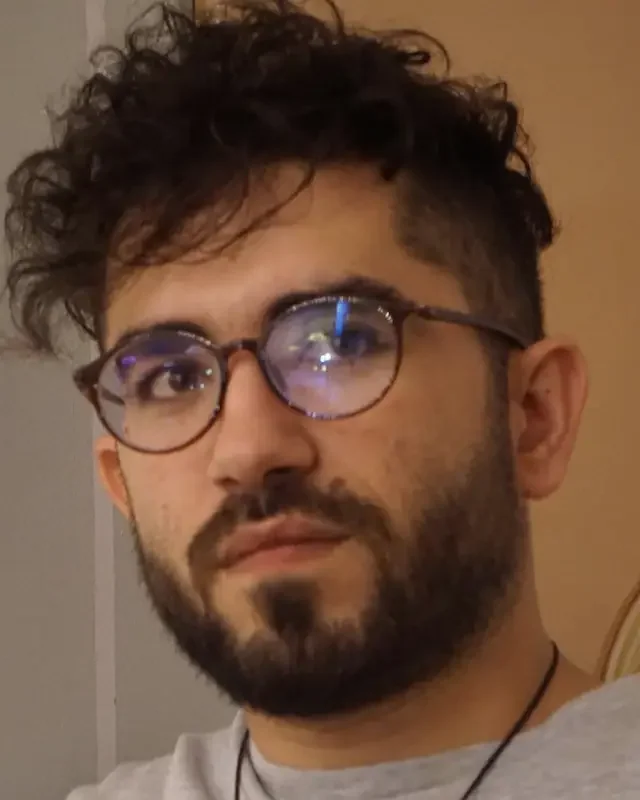
About me
I have been practising since 2016. I trained in psychoanalytic psychotherapy in Beirut, Lebanon, and I am also trained in IFS and in trauma therapy. I am currently continuing my studies with the Freud Lacan Institute (FLI) in Dublin, Ireland, and the Centre for Freudian Analysis and Research (CFAR) in London, UK. I am a PhD candidate at the Center for Lacanian Psychoanalysis (CLaP) at Ghent University in Belgium.
My story
In 2008, I left my small hometown in Syria to study at the University of Balamand in Lebanon. I began as a premedical student, hoping to become a general practitioner.
In 2011, the Syrian uprising began, and I found myself at a crossroads, living through the collapse of my society through forced displacement and imprisonment. Being in psychoanalysis helped me not only to survive, but also to make sense of the world around me. In 2012, I decided to change my studies from medicine to psychology, with a focus on psychoanalysis.
Since then, I have worked to bring psychological support to my community in Lebanon. This included the first psychological emergency unit in the north of Lebanon, offering 24/7 emergency support to people forcibly displaced there. It also included community based work such as Playback Theatre and applied arts, which led me to a master’s degree in theatre studies on the role of theatre in social interventions. My work has reached people across Syria, Lebanon, Turkey and Iraq, with a focus on the psychological care of refugees.
In 2021, I migrated to Belgium, where I started a new life and discovered Lacanian psychoanalysis. Since then, I have been engaged in the analytic discourse through my own analysis, supervision and study with recognised institutions such as the Freud Lacan Institute in Dublin, Ireland, and the Centre for Freudian Analysis and Research (CFAR) in London.
In 2023, I founded Healing on the Move vzw, a space that connects mental health professionals who have themselves been on the move with people on the move who are looking for psychotherapy in a shared language and close to their own culture. Together with my colleagues, I have supported more than 2,000 people through individual and community work.
In 2026, I began my PhD at the Center for Lacanian Psychoanalysis at Ghent University, on the Impossible Loss in Syria: how women whose loved ones were forcibly disappeared live with a loss when no body is found.
Today, I also work with individuals in my practice in Ghent and online, in English and Arabic. My own lived experience, together with my community and human rights work with people from many backgrounds, allows me to offer a space to be heard, seen and witnessed: to be recognised as a person with your own subjectivity, without being labelled by diagnostic categories.
My approach
I don’t see distress as only a private matter. What we carry is also shaped by politics, society, the economy and history.
This is why I don’t label people as disordered. A label can hide the harm that comes from the systems around a person.
Healing is not only something we do alone. It also happens with others, when people come together to change what is harming them.
So my aim is not to help you adapt to what hurts you. It is to give you a space to speak, to see where your suffering comes from, and to question it. A psychoanalysis that aims at liberation, at the heart of the work with each person.
Psychoanalysis
Psychoanalysis is a therapeutic process. It does not depend on a psychiatric diagnosis. It works through your own speech. Since Freud, psychoanalysis has worked with anxiety, phobias, loss, grief and trauma.
“Psychoanalysis has only one medium: the patient’s speech.”
For Lacan, “the unconscious is structured like a language”: it shows itself in our words, our slips, our dreams and our symptoms.
What to expect
Getting in touch
You call or write to me, and we find a time together.
The first meetings
In the first sessions, we talk about what brings you and decide whether we want to work together.
Fees
We agree on the fee together at the start.
Confidentiality
What you say stays between us.
No labels
I don’t diagnose. You are met as a person, not a category.

Get in touch
Call
+32 467 71 61 47Write
hane@hanealrustm.comJakob Heremansstraat 68, Ghent, Belgium